Are Stoics Emotionless? How to Master Your Mind Without Losing Your Humanity
Forget the myth of the unfeeling robot. True ancient philosophy is about mastering your inner world and your ego, not burying your humanity.

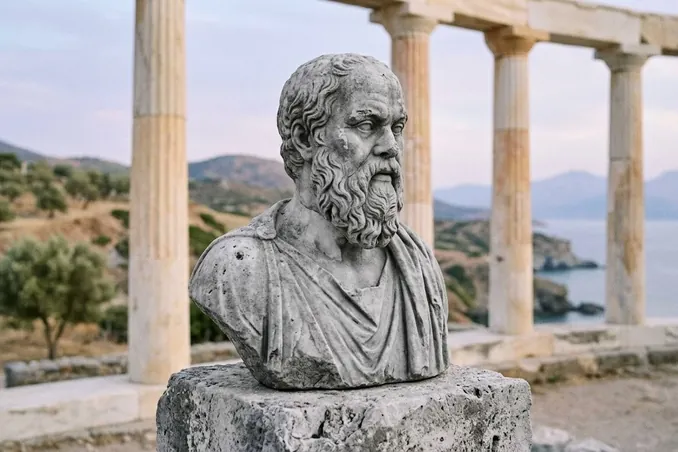
No, Stoics are not emotionless robots. If you are wondering whether adopting this ancient philosophy means you have to stop feeling joy, sadness, or love, the answer is a resounding no.
True Stoicism is not about suppressing your emotions; it is about managing your reactions to those emotions so they don’t control your behavior. Ancient philosophers like Marcus Aurelius and Seneca experienced profound grief, love, and frustration. But they developed a framework to experience these feelings without letting them destroy their inner peace.
Recommended for you
If you want to understand how to build emotional resilience without turning into an unfeeling stone, you need to understand the difference between the modern definition of a word and an ancient way of living.
The Big Misconception: “stoic” vs. “Stoic”
The biggest barrier to understanding this philosophy is the English language itself. Over centuries, the word “stoic” evolved to mean something entirely different from its philosophical roots.
- Lowercase “stoic” (The Adjective): Modern dictionaries define a “stoic” person as someone who endures pain or hardship without showing their feelings or complaining. It implies a “stiff upper lip” and a repression of one’s internal state.
- Uppercase “Stoic” (The Philosophy): The Hellenistic philosophy of Stoicism focuses on virtue, reason, and living in agreement with nature. It teaches that we cannot control external events, only our judgments about them.
When modern psychology warns us that “bottling up your feelings” leads to anxiety and burnout, they are right.
Emotional suppression is incredibly unhealthy. Fortunately, ancient Stoics agreed.
They did not advocate for ignoring your feelings; they advocated for examining them under the microscope of reason.
The Stoic Framework of Emotions: A Deep Dive
To achieve true information gain on this topic, we must look at how the ancient Greeks actually categorized human feelings.
They didn’t just lump all feelings into one bucket. They divided our internal experiences into three distinct categories.
1. Propatheia (Proto-Emotions or First Reactions)
Imagine someone jumps out and scares you, or a car abruptly cuts you off in traffic.
Your heart rate spikes, you gasp, or you feel a sudden flash of anger. The Stoics called these propatheia, involuntary, biological reflexes.
Insight: Stoics understood that you cannot prevent these first reactions. They are natural and biologically hardwired. You are not a “bad Stoic” for feeling an immediate pang of fear or anger. The philosophy only concerns itself with what you do after that first reflex.
2. Pathe (Destructive Passions)
This is the category of emotions the Stoics actively worked to eliminate.
Pathe refers to intense, irrational emotions that cloud judgment and lead to destructive behavior.
They categorized these into four primary groups:
- Distress (Lupa): Irrational agony over present circumstances.
- Fear (Phobos): Irrational dread about the future.
- Lust/Craving (Epithumia): Irrational desire for things outside your control.
- Delight (Hedone): Irrational, fleeting elation over external things (like gloating or chasing a cheap dopamine high).
Stoics believed these passions arise from false judgments, the mistaken belief that external things (wealth, status, the opinions of others) are inherently good or bad.
3. Eupatheia (Good Emotions)
Here is the ultimate proof that Stoics aren’t emotionless. The philosophy aims to replace destructive passions with eupatheia, which translates to “good feelings” or healthy emotions.
When you remove irrational fears and desires, you make room for:
- Joy (Chara): A deep, rational elation rooted in your own virtue and good character, replacing shallow delight.
- Caution (Eulabeia): A rational avoidance of vice and bad choices, replacing irrational fear.
- Wishing (Boulesis): A rational desire for virtue and goodness, replacing greedy craving.
Tip: Stoicism doesn’t empty your emotional cup; it simply filters out the toxic sludge so you can fill it with profound, sustainable joy.
Table: The Stoic Emotions
Instead of suppressing feelings, Stoics train themselves to convert destructive passions into healthy, rational emotions.
Here is what that looks like in practice:
| The Trigger (External Event) | The Irrational Passion (Pathe) | The Rational Alternative (Eupatheia) | Real-World Example |
|---|---|---|---|
| Facing a Future Threat | Fear (Phobos): Paralyzing anxiety about what might happen. | Caution (Eulabeia): Taking sensible steps to prepare, without agonizing over the outcome. | Buying car insurance (Caution) vs. refusing to drive because you might crash (Fear). |
| Wanting Something New | Craving (Epithumia): A desperate, greedy lust for money, status, or items you don’t have. | Wishing (Boulesis): A rational preference for good things, while remaining perfectly content without them. | Working hard for a promotion (Wishing) vs. losing sleep out of jealousy over a coworker’s raise (Craving). |
| Experiencing Success | Delight (Hedone): Shallow, ego-driven gloating or chasing temporary highs. | Joy (Chara): A deep, quiet appreciation for your own good character and the present moment. | Feeling peaceful satisfaction after helping a friend (Joy) vs. bragging about your new sports car on social media (Delight). |
| Facing Present Hardship | Distress (Lupa): Irrational agony and complaining about a situation you cannot change. | Acceptance (Amor Fati): Embracing reality as it is and focusing entirely on your next logical step. | Rebooking a canceled flight calmly (Acceptance) vs. screaming at the airline gate agent (Distress). |
The Misunderstood Goal: Apatheia
Critics often point to the Stoic goal of apatheia as proof that the philosophy promotes apathy.
This is another translation error.
In ancient Greek, apatheia simply means “without pathe” (without destructive, irrational passions).
It does not mean “without feeling.” Reaching a state of apatheia means you have achieved a serene, tranquil mind (ataraxia) that cannot be easily shaken by a bad day, a rude coworker, or a financial setback.
You still love your family, you still enjoy a good meal, and you still care about the world.
You simply stop letting the unpredictable nature of the world dictate your mood.
How to Process Emotions Like a Stoic (4 Actionable Steps)
Modern Cognitive Behavioral Therapy (CBT) was actually founded on Stoic principles.
Both systems teach that it is not events that upset us, but our beliefs about those events.
Here is how you can practically apply Stoicism to your emotions today.
Step 1: Create the “Stoic Pause”
When you feel a strong emotion rising, do not act immediately. The philosopher Epictetus advised,
“Do not be swept away by the impression, but say: ‘Wait for me a little, impression; allow me to see who you are, and what you are testing.’”
Create a gap between the stimulus and your response. Take a deep breath.
Step 2: Test the Impression
Ask yourself: “Is this feeling based on reality, or my interpretation of reality?”
If a friend cancels plans, the objective reality is simply that they canceled.
The anger or rejection you feel comes from your interpretation that they don’t care about you.
Challenge that story.
Step 3: The Dichotomy of Control
Apply the most famous Stoic tool. Ask: “Is the source of this emotion within my control?”
You cannot control the economy, the weather, or what other people think of you.
If you are agonizing over something outside your control, you are wasting energy.
Shift your focus entirely to what you can control: your actions, your effort, and your attitude.
Step 4: Choose a Virtuous Response
Once you have paused, tested the impression, and recognized what you can control, choose to act with the four Stoic virtues: Wisdom, Courage, Justice, and Temperance.
You might still feel sadness or disappointment, but you are now choosing to act with dignity rather than throwing a tantrum.
Why Stoicism Actually Makes You Feel More
When you spend your life riding an emotional rollercoaster, spiking into rage, plunging into anxiety, and chasing shallow thrills, your emotional baseline becomes exhausted.
By practicing Stoicism, you strip away the petty anxieties and unnecessary dramas. You stop agonizing over a delayed flight or a rude email.
This leaves you with significantly more mental bandwidth to experience deep, meaningful emotions.
You can appreciate the present moment, love your family without the suffocating fear of losing them, and feel genuine gratitude for being alive.
Stoicism doesn’t make you a robot. It makes you profoundly, unshakeably human.
Conclusion (Redefining the “Emotionless” Stoic)
So are Stoics emotionless? As we have uncovered, the answer is a definitive no. To practice Stoicism is not to transform yourself into a cold, unfeeling statue.
It is the active, daily practice of refusing to let external chaos dictate your internal peace.
In a modern world that constantly drains our emotional energy, through stressful news cycles, social media comparisons, and unpredictable daily pressures, this ancient philosophy offers a profound antidote.
By learning to separate your initial, natural reflexes from destructive, irrational passions, you are not burying your humanity.
You are elevating it.
Mastering the “Stoic Pause” and focusing only on what you can control doesn’t mean you feel less.
It means you clear away the toxic anxiety and anger so you have the bandwidth to feel better, experiencing deeper joy, more profound love, and unshakeable resilience.
Frequently Asked Questions (FAQ)
Can a Stoic cry or grieve?
Yes. Seneca, one of the most famous Stoic writers, wrote extensively about grief. When his friend lost a loved one, Seneca didn’t tell him to stop crying. He advised against excessive, theatrical wailing meant to draw attention. Tears are a natural biological response (a propatheia); suffering indefinitely is a choice.
Is Stoicism just about toxic masculinity?
Absolutely not. While modern internet culture sometimes misappropriates Stoicism as a tool for “alpha male” emotional repression, ancient Stoicism was universally applied. It is about developing a strong moral character, practicing justice, and being a good citizen of the world, regardless of gender.
Can Stoics fall in love?
Yes. Stoics deeply valued relationships, friendship, and community. However, they practiced loving without desperate attachment. A Stoic loves their partner fiercely while rationally accepting that all humans are mortal. This allows them to appreciate the relationship fully in the present moment without being paralyzed by the fear of future loss.
How do Stoics deal with anxiety?
Stoics treat anxiety by fiercely separating the past and future from the present. Marcus Aurelius wrote about confining yourself to the present. Anxiety lives in the future, a place you cannot control. By grounding yourself entirely in the actions you can take right now, the irrational dread of the future dissolves.
Did you find an error in this article? Email: [email protected].

When living with a narcissist forces you to abandon yourself, you aren't just surviving, you're experiencing the co-narcissistic trauma response. Here is how to identify it and break the cycle.